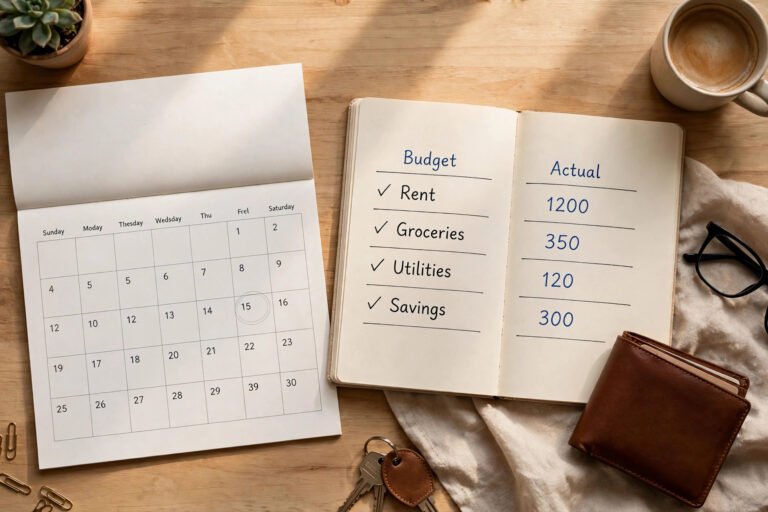
Most savings advice fails for the same reason diets fail: it asks you to change everything at once. Save twenty percent of your income, cut out all the fun, build a six-month emergency fund — all of it is correct, and almost none of it survives contact with a real week. The 52 week money challenge works the other way around. It asks you for one dollar in week one. Then two dollars. Then three. By the time the amounts get serious, saving has already become a habit, and at the end of 52 weeks you have $1,378 you did not have before.
That is the whole trick, and it is why this challenge has survived for years while flashier savings fads fade. It turns an abstract goal — “save more money” — into one concrete action every week: move this week’s amount into savings, tick the box, move on. This guide gives you the full plan: the exact math, the versions for different incomes, how to start in November instead of waiting for January, and what to do when you miss a week — because you will, and it does not have to end the challenge.
What Is the 52 Week Money Challenge?
The 52 week money challenge is a year-long savings game where you deposit an amount matching the week number, starting with $1 in week 1 and rising by $1 each week until you deposit $52 in week 52, finishing with $1,378 saved.
Think of it as a staircase, not a cliff. A flat $115-a-month target asks for the same effort in your hardest month as in your easiest. This challenge starts at one dollar and grows with you: the first month costs just $10, the first quarter $91. By the time you reach the $40-plus weeks, nine months of habit are carrying you instead of willpower dragging you.
How the 52 Week Money Challenge Works, Week by Week
The rules fit in one sentence: save $1 in week 1, $2 in week 2, adding one dollar each week until $52 in week 52. Add every deposit together and the total is exactly $1,378.
Here is how the year breaks down, so there are no surprises:
- Weeks 1 to 13 (the first quarter): $91 total. The biggest single week is $13. This is the easy runway, and it is where the habit forms. If you start on 1 November, this quarter runs through the end of January, and the small amounts are a gift during the expensive holiday season.
- Weeks 14 to 26 (the second quarter): $260 more, $351 total. Weekly amounts run from $14 to $26. This is where it starts to feel like real saving, and where a separate savings account starts to matter — money sitting in your everyday account has a way of leaking back out.
- Weeks 27 to 39 (the third quarter): $429 more, $780 total. Weekly amounts run from $27 to $39. This is the stretch most guides gloss over, and it is where people quietly quit. Plan for it now, not when week 32 arrives.
- Weeks 40 to 52 (the final quarter): $598 more, $1,378 total. Weekly amounts run from $40 to $52. This last quarter alone is more than 43 percent of the whole total, which is exactly why the classic January start is badly timed: it drops the hardest weeks right onto December, when holiday spending and year-end bills are already competing for the same money.
One honest note: $1,378 will not build a full emergency fund or cover a major crisis. What it will do is cover the car repair, medical copay, or broken appliance that currently goes on a credit card — and prove, with a bank balance rather than a pep talk, that you can save consistently for a year.
52 Week Money Challenge Versions Compared
The classic version is only the starting point. Pick the version that fits your actual income rather than forcing the classic one and quitting in week 35. Every version below keeps the same 52-week rhythm.
- Classic (ascending): $1 to $52, $1,378 total. Best if your income is steady and you want the motivational ramp. Its weakness is the expensive finish, especially for January starters.
- Reverse: $52 down to $1, $1,378 total. You front-load the hard part while motivation is highest, and the year gets easier as it goes. Best if you start in January — it puts the $40-plus weeks in January and February instead of December — or if you just received a bonus or tax refund.
- Flat: $26.50 every week, $1,378 total. The same total with one number to remember and one automatic transfer. Best if you value simplicity over the game. Round it to $27 a week and you finish with $1,404.
- Half-size: $0.50 to $26, $689 total. Halve every deposit and you halve the total. The right version on a low or irregular income, or while paying off debt. A $689 finish beats a $1,378 plan abandoned in March.
- Double: $2 to $104, $2,756 total. Double every deposit if you have room in your budget. Pick it only if the classic amounts genuinely feel too easy after a month.
- Custom target: work backwards from your goal. Want $5,000? That is about $96.15 a week flat. Want a $1,000 holiday fund? About $19.25 a week flat. The challenge is a container; you choose what goes in it.
Starting Your 52 Week Money Challenge in November
Almost every guide assumes you start in January, and that assumption costs people their finish. Starting in November is not a late start — in several ways it is smarter, and this article is published on 1 November for exactly that reason: start this week instead of waiting two months for a “fresh start” that never comes.
Here is why November works. Your 52 weeks run from early November 2026 to the end of October 2027. The first eight weeks — the cheapest, $1 to $8 — land during the holiday season, when money is tightest. By the time deposits reach $40-plus, it is autumn 2027, far from holiday spending, with eleven months of practice behind you.
Starting now also dodges the biggest trap in the challenge: the January-start December collision. A January starter owes $48 to $52 a week in December, the most expensive month of the year. A November starter hits those weeks in October, an ordinary month. Same total, much higher chance of finishing.
Do not wait for the first of a month, a Monday, or a new year. Pick your start day this week — payday is ideal — and call that week 1. The challenge counts weeks from your start date, not the calendar. A year from now, the only regret will be the two months spent waiting for permission to start.
How to Set Up Your 52 Week Money Challenge in 15 Minutes
A challenge with no setup takes about fifteen minutes to make real. Do these five things before your first deposit, in this order.
- Open a separate savings account, and do not link its debit card to anything you shop with. This is the most important setup step. Money in your everyday checking account is spending money with a savings label on it. A separate account — ideally high-yield, since money sits there up to a year — puts one small barrier between you and an impulse purchase, and that barrier is usually enough.
- Put the chart somewhere you will see it. Print the week numbers 1 to 52, or keep a note on your phone, and tick each week off as you pay it. The chart is the scoreboard that keeps you going in week 33. People who track visibly finish far more often than people who keep the plan in their head.
- Automate what you can, and calendar the rest. The flat version automates perfectly with one weekly transfer. The classic version changes every week, so set a weekly reminder for payday, or transfer four weeks at once on payday. The first four weeks cost $10 combined; as amounts grow, switch to a weekly transfer so no single payday takes a big hit.
- Decide your payday rule in advance. For biweekly paychecks, deposit two weeks’ worth on each payday: weeks 1 and 2 ($3) first, weeks 3 and 4 ($7) next, and so on. That is 26 payday deposits instead of 52 weekly ones.
- Tell one person what you are doing. A friend or partner who will ask how week 20 is going. Accountability is the difference between a missed week and a quietly abandoned challenge — and a missed week is fixable, while a silent quit is not.
What to Do When You Miss a Week in the 52 Week Money Challenge
You will miss a week. Almost everyone does — a bill lands, a paycheck is short, life happens. Guides that pretend otherwise set you up to quit, because the first miss feels like failure. It is not: a missed week is a normal event with a simple fix, and the only real way to fail is to stop entirely.
Here is the recovery plan, in order of preference:
- Spread it over the next four weeks. Add a quarter of the missed amount to each of your next four deposits. Missed week 30 ($30)? Add $7.50 to weeks 31 to 34. The catch-up is barely noticeable, and you stay on schedule.
- Swap it with a future low week. If you are on the reverse version, later weeks are cheaper anyway; simply pay the missed amount in place of a cheaper future week and pay that cheaper amount now. The total stays identical.
- Pay it late, in full, when money frees up. If a tax refund or a quiet month gives you breathing room, clear the backlog in one go, and promptly — a backlog older than a month starts to feel like debt, and debt is what makes people quit.
- Never do two things: skip it silently, or double up the very next week. Skipping silently turns one miss into a gap you stop looking at; doubling up turns a $30 miss into a $61 week, which is how a small problem becomes the reason you quit.
If you miss several weeks in a row, do not restart from week 1 and throw away months of progress. Keep your balance, resume at the current week number, and spread the backlog over the remaining weeks. A challenge finished with three messy months beats a perfect one abandoned in March.
Where to Keep the Money, and What to Do With $1,378
Keep the money in a separate savings account, not invested and not in cash at home. A year is too short a horizon for investing — markets dip, and you need this money in full when week 52 arrives. A high-yield savings account pays a little interest while keeping every dollar safe and accessible.
When you finish, give the $1,378 a job before it drifts back into spending: a starter emergency fund if you do not have one; an extra payment on high-interest debt, where it saves real interest; or a sinking fund for a known future cost. Left in the account with no purpose, a year’s discipline quietly evaporates in a month.
When you finish, consider going again. Second-year challengers usually pick a bigger version, because year one proved something no article can: that they are someone who saves every week. That identity shift is the real prize. The $1,378 is just the receipt.
52 Week Money Challenge Mistakes to Avoid
- Keeping the money in your everyday account. If the balance is visible every time you check your spending money, it will get spent. Separate account, no card attached, no exceptions.
- Starting in January with no December plan. If you do start in January, use the reverse version so the expensive weeks land early, or set aside a small buffer in November specifically for the final five weeks.
- Treating a missed week as a failed challenge. One miss is a scheduling problem. Quitting is the failure. Use the four-week spread above and keep going.
- Choosing a version to impress yourself rather than fit your budget. The half-size version finished is worth more than the double version abandoned. You can always scale up in year two.
- Counting money you only moved, not saved. If you “save” $30 in week 30 and then pull $30 back out for takeout, the deposit did not happen. Count only money that is still in the savings account at the end of the week.
- Forgetting the finish-line plan. Decide now what the $1,378 is for. A finish line with no prize waiting is much easier to walk away from in week 44.
Frequently Asked Questions
How does the 52 week money challenge work?
You save $1 in week 1, $2 in week 2, and add $1 each week until $52 in week 52, totalling $1,378. You can start any week — the challenge counts 52 weeks from your start date, not from January.
How much money do you save with the 52 week money challenge?
Classic and reverse both save $1,378, flat saves $1,378 at $26.50 a week, half-size saves $689, and doubling saves $2,756. Your total depends entirely on the version you choose.
Can I start the 52 week money challenge in November?
Yes, and November is arguably better than January. It puts the cheapest weeks ($1 to $8) over the expensive holiday season and the most expensive weeks in the following autumn, avoiding a January starter’s $48-to-$52 weeks in December.
What happens if I miss a week of the 52 week money challenge?
Nothing fatal. Spread the missed amount over your next four deposits, swap it with a cheaper future week, or pay it late when money frees up. Never skip it silently or double up in full. A challenge with messy weeks still finishes; a quit one does not.
Is the 52 week money challenge good for a low income?
Yes, if you scale it. The half-size version runs $0.50 to $26 a week and finishes at $689 — realistic on a tight budget. Starting small is the point: a $689 finish you reach beats a $1,378 plan you abandon.
Final Word
The 52 week money challenge will not make you rich, and any guide that hints otherwise is selling something. What it will do is turn saving from a vague intention into a weekly action you can tick off, starting with a single dollar this week. Print the chart, open the separate account, and make your first deposit on your next payday. In 52 weeks you will have $1,378 — and proof that you can save.